

KYIV, Ukraine — Ukraine warned allied governments for years to prepare for a new kind of war, one in which cheap, mass-produced drones would overwhelm both the tactics and economics of traditional air defense.
“You don’t have time,” Andrii Hrytseniuk, the CEO of Brave1, recalled telling officials in recent years. “Shahed [drones] will come not only to Ukraine, but to other countries. You need to use your time not to stick to previous conventional warfare, but to work on the new era.”
Brave1 was established in 2023 as Ukraine’s state-backed defense innovation hub, which funds, tests, and fast-tracks new military technology from hundreds of Ukrainian startups.
Three years after Brave1’s formation, the Iran war has made Hrytseniuk’s warning prescient.
In the first week alone, the U.S. and Israel struck more than 3,000 targets across Iran while Tehran fired over 500 ballistic missiles and nearly 2,000 drones at U.S. bases and Israeli cities across 12 countries, burning through over 800 Patriot interceptor missiles in three days — more than Ukraine received from allies throughout four years of war, Ukrainian President Volodymyr Zelenskyy pointed out on Thursday.
“And we are not slowing down,” U.S. Central Command posted on X the next day.
The conflict has since drawn in at least a dozen countries and put Ukraine’s counter-drone expertise at the center of a global scramble, with the Pentagon and at least one Gulf state now in active talks to buy Ukrainian-made interceptor drones, according to Financial Times. An EU envoy, meanwhile, is reportedly brokering introductions between Gulf governments and Kyiv’s manufacturers.
“They are really asking for some help with interceptor drones specifically,” Hrytseniuk told Military Times on Friday.
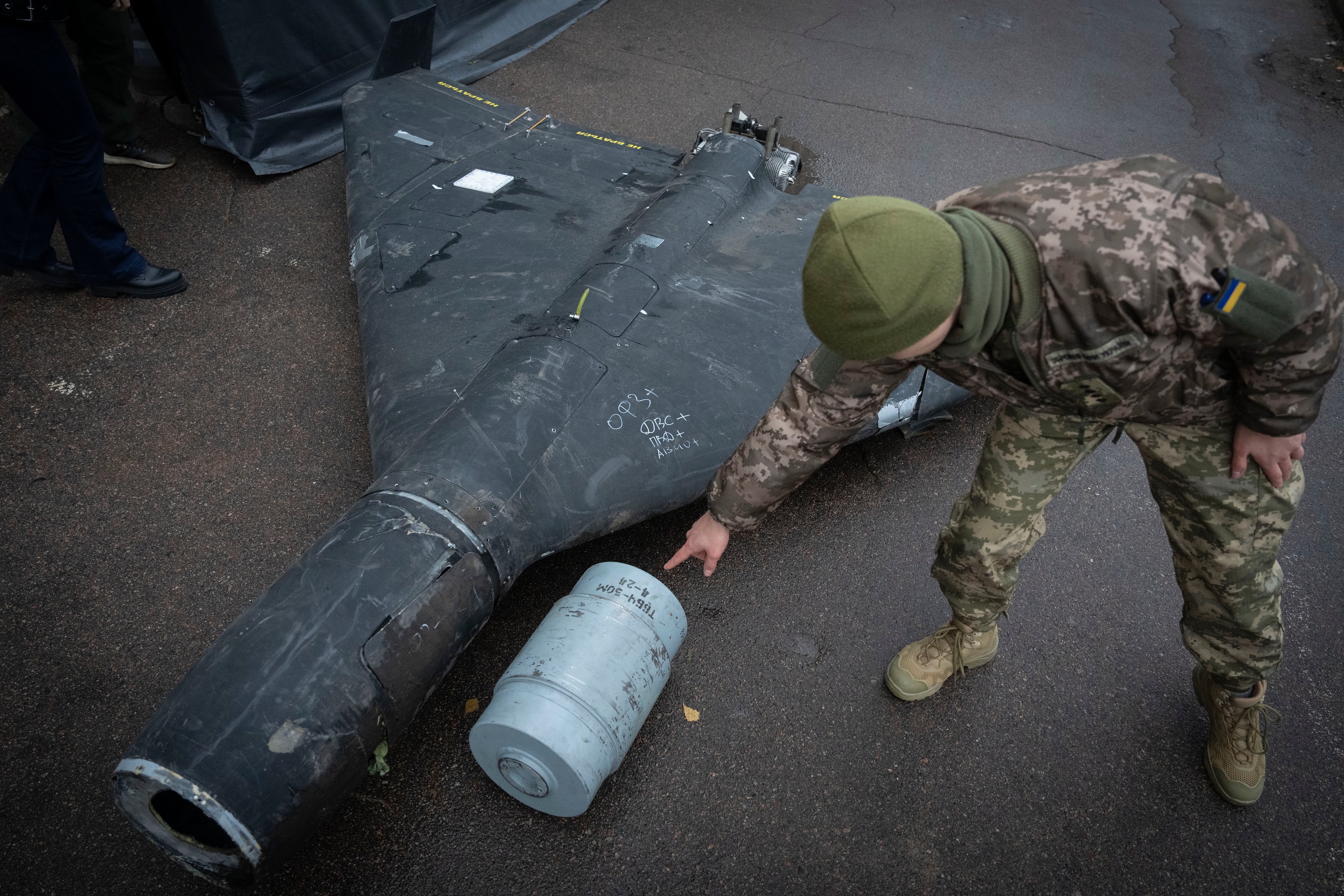
Ukraine first made the shift to cheap interceptors not by choice, but because Russia’s nightly Shahed waves were burning through Western-provided missiles faster than allies could resupply them.
Last month, Ukrainian interceptors destroyed more than 70% of incoming Shaheds over Kyiv, freeing scarce Patriot missiles for the ballistic threats they were designed to stop.
The irony is hard to ignore: the besieged country that spent four years begging for Patriot batteries to combat a nuclear power 10 times its size has quietly built a new layer of air defense at a fraction of the cost, according to The New York Times — and now Washington, which spent roughly $4 billion on missile defense interceptors in the first week of the Iran war alone, is calling Kyiv for help.
Interceptor drones are small, fast, semi-autonomous unmanned aircraft — often costing between $1,000 and $2,500 each — designed to hunt and destroy incoming drones by ramming into them or detonating alongside them at altitude.
Compact enough to fit inside a duffel bag and fast enough to chase a Shahed in the dark, Ukraine’s interceptors can fly at speeds between 195 and 280 miles per hour, depending on the model.
Most combine thermal imaging with radar tracking and AI-assisted guidance, with a human operator taking manual control for the final seconds of the intercept.
Ukraine now has more than 20 companies producing interceptor drones, the National Security and Defense Council announced in January.
“The most impressive thing is how far we have technically advanced,” Roman Yeremenko, a director at Aero Center, a Ukrainian full-cycle manufacturer that builds both drones and their ammunition, told Military Times earlier this week.
Modern Ukrainian interceptors started with Mavic scouts dropping jerry-rigged grenades — simple, improvised.
Then came FPV drones: first 7-inch frames, then 10, then 12. Aero Center’s first munition, Malyuk (“Baby”), weighed just 450 grams — enough for one or two Mavic drops.
“But the troops kept asking for more capabilities,” Yeremenko said.
Then came “1 kg payloads, 1.5 kg, even bigger,” he said.
Engineers working long into the night learned to wire warheads directly to flight controllers, built initiation systems and moved into producing kamikaze FPVs.
What’s getting developed now? Heavy bombers carry 5–10 kg of ammunition and fly 25–35 miles regularly, according to Yeremenko.
“This is a war of technology,” he said. “And the one who is ahead will win this war.”
Several Ukrainian companies are now fielding systems with combat records no Western manufacturer can match.
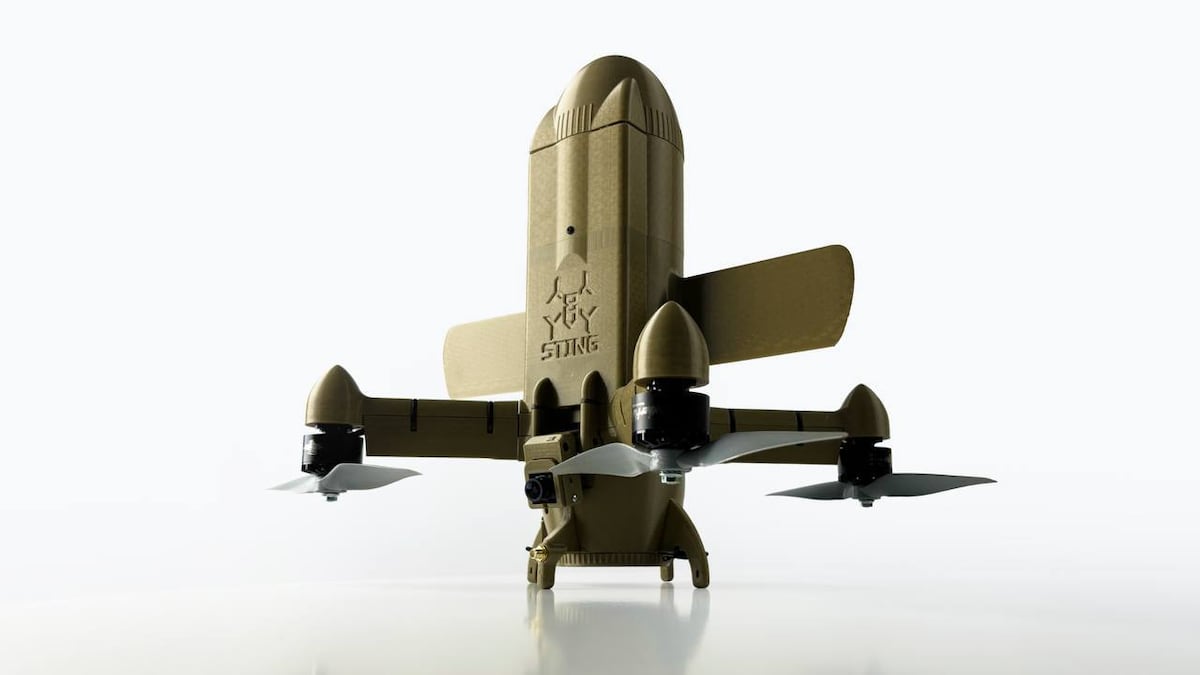
Wild Hornets’ Sting has been in combat longer than any other Ukrainian interceptor.
A spokesman for the group told CBS News last week that the $2,500 FPV drone has downed 3,900 drones since May 2025 — including, the company says, the first confirmed downing of Russia’s jet-powered Geran-3 and a Shahed fitted with an air-to-air missile.
Reaching 195 mph with a thermal camera and AI-assisted terminal guidance, it can engage targets up to 15 miles away and fits in a standard duffel bag.
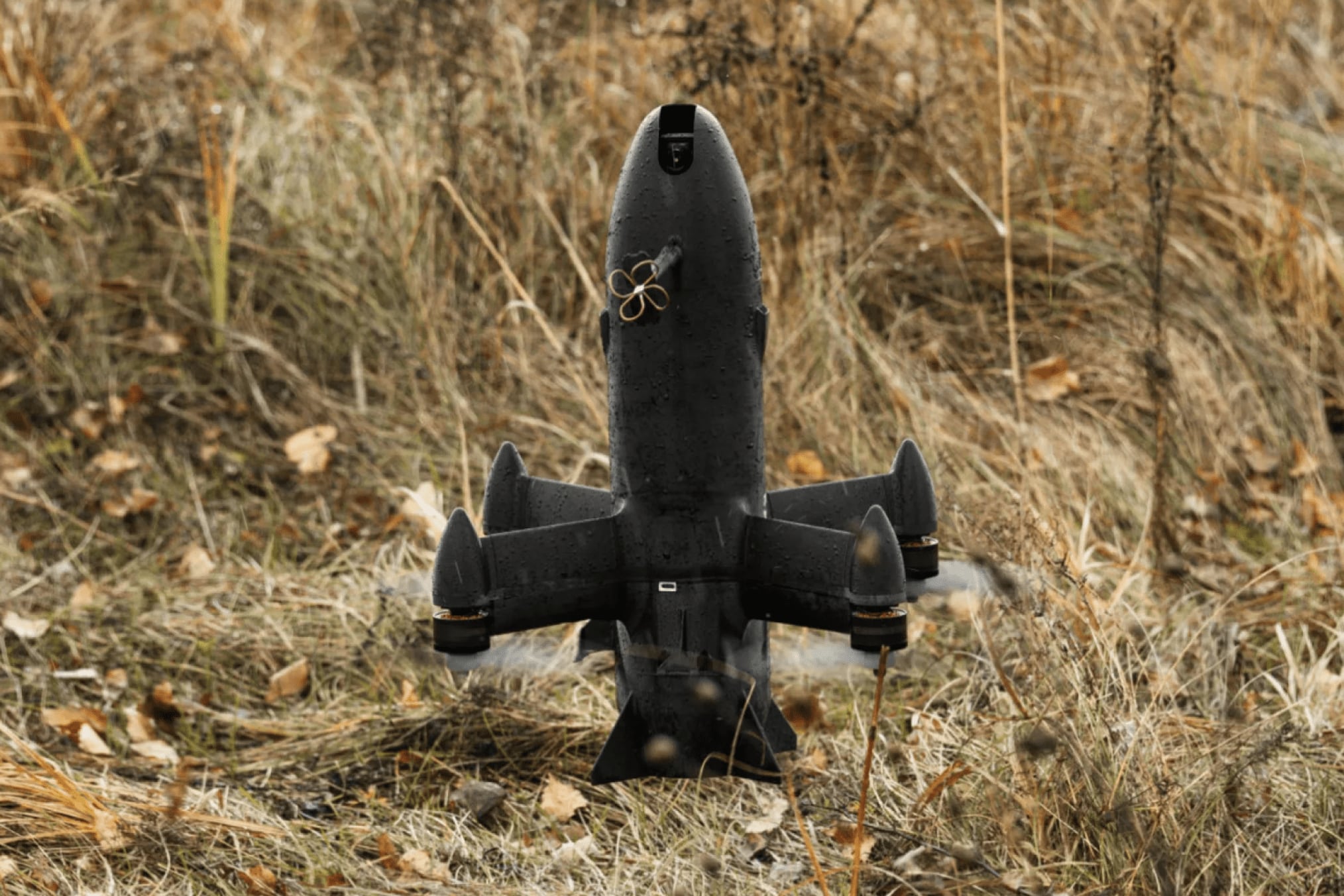
At the lowest price point is SkyFall’s P1-SUN, a fiber-optic Shahed hunter on a 3D-printed modular airframe that costs Ukrainian units just $1,000 a pop.
A company representative recently told Reuters that the drone, which SkyFall says has been upgraded to 280-mph capabilities with computer vision and thermal imaging, has downed more than 1,500 Shaheds and 1,000 other drones in four months — and is a hot ticket item internationally since Iran came under fire.
Then there is Ukrspecsystems’ Octopus, now built under license by more than 15 Ukrainian manufacturers and, since November, at a new factory in the United Kingdom.
It flies at night, cuts through electronic jamming at up to 4,500 meters, and locks onto targets autonomously — the kind of all-conditions reliability that made it the MoD’s pick for mass production.
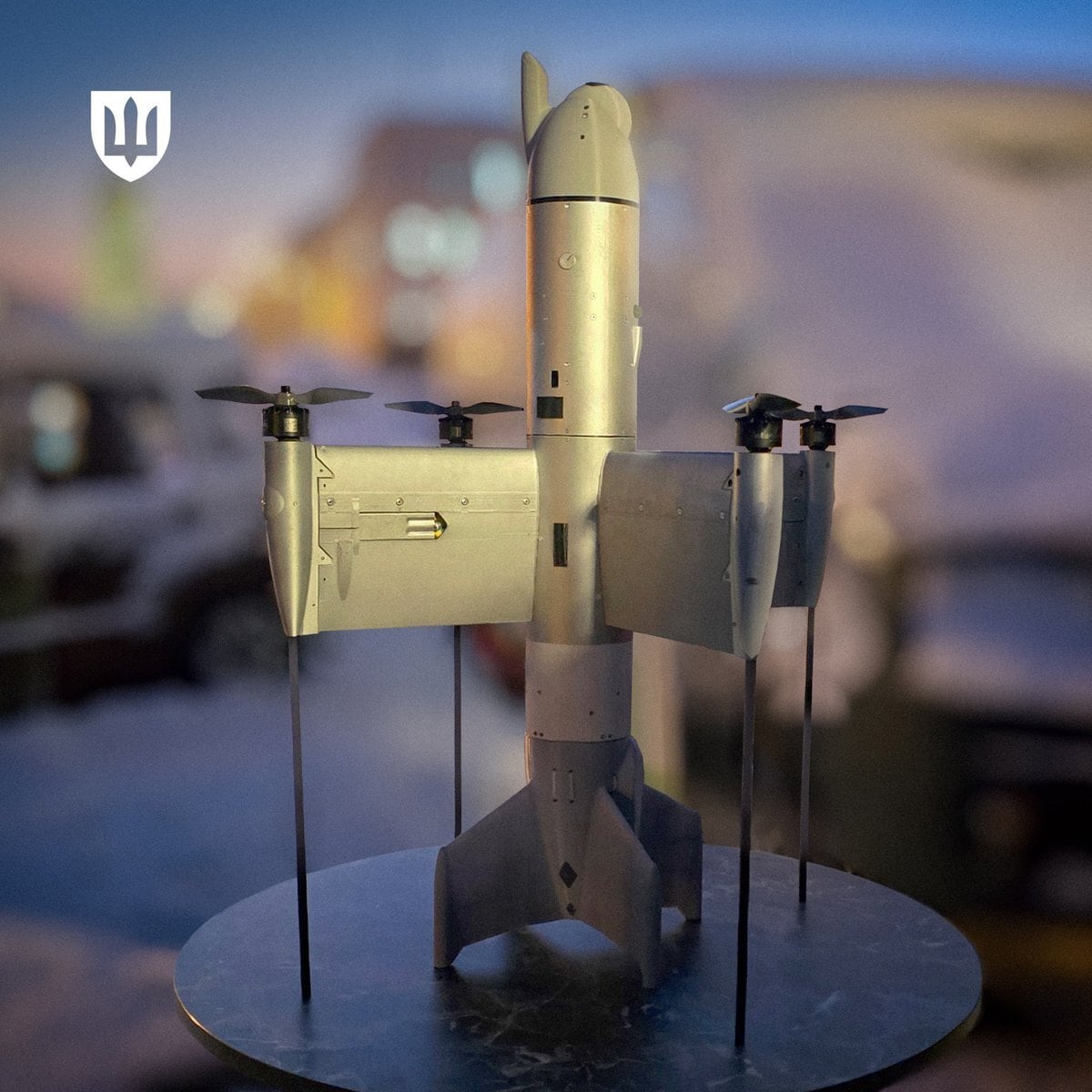
The UK deal marked the first time a Western government licensed a Ukrainian-designed interceptor for domestic production, a model that five NATO countries — Germany, France, Italy, Poland and the UK — have since agreed to build on by jointly developing affordable interceptor drones of their own, per Militarnyi.
Not every system follows the same blueprint. Aero Center is teaming up with Dwarf Engineering, a software company focused on creating multiplatform mission control systems for UAVs, to build a comprehensive interceptor drone package for Ukrainian units and international partners that includes the drone, payload and software needed to integrate it into current air defense systems.
It’s a different approach to development entirely, Ihor Matviyuk, who heads Aero Center Drones, Aero Center’s subsidiary UAV division, told Military Times.
“An extra 100 grams [on a combat drone] can mean minus two kilometers range,” Vladyslav Piotrovskyi, Dwarf Engineering’s CEO, told Military Times on Friday.
Piotrovskyi added that the trade-off only works if all three components are optimized as one.
But every groundbreaking interceptor system in Ukraine’s arsenal faces the same expiration window.
Russia’s latest strike drone, the feared Geran-5, can reach speeds up to 370 mph — technically fast enough to outrun every Ukrainian interceptor currently in service, according to Business Insider — and they grow deadlier every day.
“The Russians are trying. They are not as stupid as they look,” Yeremenko told Military Times. “They are adapting to our means of destruction.”
Ukrainian and Russian tech becomes outdated every six weeks on average, the drone experts explained, so Ukraine cannot stand still.
Aero Center is now building medium-class drones with payloads up to 10 kilograms and ranges of roughly 25 kilometers — “middle-sized drones, but with the functions and features of big bombers” — designed for a battlefield where the threat evolves faster than any single airframe can answer, the company’s UAV expert said.
Ukraine has already learned how to build and integrate an entirely new air defense system in an asymmetric war. Now, it’s offering the playbook to allies — in exchange for the kind of help Kyiv still cannot produce on its own.
“We are ready to help. We are suggesting help,” Brave1’s CEO told Military Times. “For us, it’s important to have an alliance that is strong — to stop the war and prevent the start of new wars.”
Alongside an image of a burning Shahed posted Friday on X, Ukraine’s Ministry of Defense spelled out its current offer to the West:
“We can help you fight against Shaheds. Help us fight against ballistic missiles.”
Read the full article here